High-Risk, Low-Frequency ED Simulation Cases Worth Running
Chester "Chet" Shermer, MD, FACEP · October 8, 2026
About the author: Dr. Chester Shermer, MD, FACEP
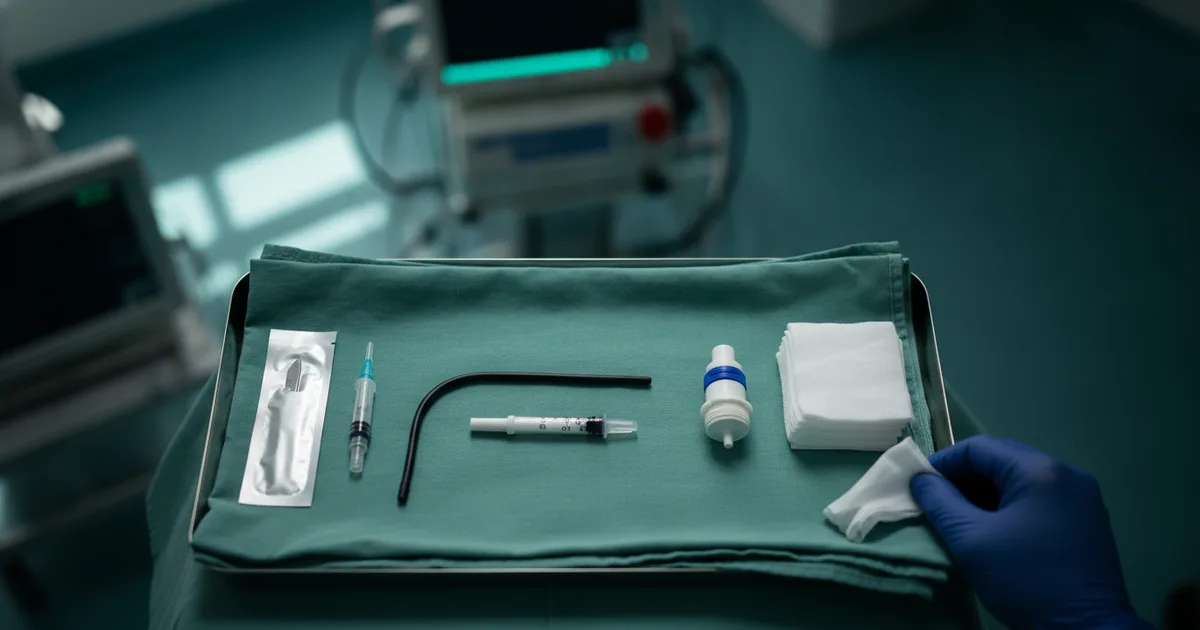
The ED cases that decide survival are the ones you see once every few years. Five to rehearse, from CICO to lateral canthotomy, and how to build each scenario.
A 58-year-old long-haul trucker with a short, thick neck is paralyzed for intubation. The video laryngoscope shows blood and swollen tissue. Two passes fail, the supraglottic airway will not seal, and the bag no longer moves the chest while the saturation falls through 80%. Nobody in the room has cut a neck on a living patient. The scalpel is in the bottom drawer of the airway cart.
Bottom line: the cases that decide survival in the ED are the ones your department sees once every few years, and the hand skills they need fade within months of training. Build a short rotating list of those cases, run them in your own resuscitation bay, and protect the debrief.
Cannot intubate, cannot oxygenate
The Difficult Airway Society 2025 guideline keeps a linear algorithm: Plan A tracheal intubation, Plan B supraglottic airway, Plan C facemask ventilation, Plan D emergency front-of-neck airway. It puts continuous oxygen delivery first, confirms ventilation with waveform capnography, and tells the team to move forward through the plans when one fails [3]. The 2015 version made scalpel cricothyroidotomy the preferred rescue technique, said every anaesthetist should practise it, and stressed that the team must declare the difficulty out loud [4].
Build the case so that failure is unavoidable. Then drill the 2015 scalpel-bougie-tube steps: identify the cricothyroid membrane with the laryngeal handshake, make a transverse stab incision through it, turn the blade 90 degrees with the sharp edge toward the feet, slide a bougie along the blade into the trachea, railroad a lubricated 6.0 mm cuffed tube, inflate, ventilate, and confirm with capnography [4]. Make the airway lead say "cannot intubate, cannot oxygenate" before anyone picks up the blade. Time the interval from the first failed attempt to the first capnography waveform, then run it again.
Repeat it often. In a multicenter trial of 82 medical students trained to a passing standard on emergency cricothyroidotomy, skills fell significantly after 1 month, and no one retested at 6 months passed [2]. Both DAS guidelines are written for adults [3,4], so children need their own airway case with their own equipment. The basics of the drug-assisted airway are in our RSI decision framework.
Maternal arrest and eclampsia
Most EDs are not delivery suites, which is why these cases belong in simulation. The 2025 AHA algorithm for cardiac arrest in pregnancy calls for continuous manual left lateral uterine displacement when the fundal height is at or above the umbilicus, preparation for resuscitative delivery from the start of the arrest, and delivery by 5 minutes if there is no return of spontaneous circulation [5,6]. It assigns the airway to the most experienced operator, because the airway in pregnancy is often difficult. If magnesium is running, stop it and give calcium [6].
Write the case so obstetrics is paged at minute zero and the hysterotomy kit is already in the bay. Then let the obstetrician be delayed. The test is whether the emergency physician makes the incision on time while compressions continue.
Eclampsia gets its own case. Magnesium sulfate is the first-line anticonvulsant: 4 to 6 g IV as a loading dose over 20 to 30 minutes, then 1 to 2 g per hour [7]. In the Magpie trial of 10,141 women with preeclampsia in 33 countries, magnesium reduced eclampsia by 58% compared with placebo (0.8% versus 1.9%) [18]. Treat severe-range blood pressure, 160 mm Hg systolic or 110 mm Hg diastolic or higher [7]. Build in the toxicity branch: absent patellar reflexes, slowing respirations, the infusion stopped, calcium gluconate drawn up.
A precipitous delivery in triage can add shoulder dystocia. ACOG lists McRoberts positioning and suprapubic pressure first, then delivery of the posterior arm or internal rotational maneuvers [8]. Assign one nurse to call the elapsed time aloud.
Dosing traps: pediatric arrest and refractory anaphylaxis
Pediatric arrest epinephrine is 0.01 mg/kg IV or IO, which is 0.1 mL/kg of the 0.1 mg/mL concentration, to a maximum single dose of 1 mg, repeated every 3 to 5 minutes [9]. The arithmetic is simple at a desk. At the bedside it fails. In a randomized simulation study of neonatal resuscitation dosing, 70 NICU and pediatric ED nurses prepared 136 epinephrine doses and only 57% were correct. Choosing the right concentration was the only factor associated with a correct dose [10]. In a simulated pediatric arrest, residents using PALS pocket cards made shock or drug dose errors in 11 of 78 opportunities (14%), compared with 1 of 78 when a guided app was used [11].
So design the error in. Give a stated weight that does not match the child. Stock both the 1 mg/mL and 0.1 mg/mL vials. Require a length-based tape or a precalculated dosing card, and a read-back of drug, dose, and concentration before the push. More detail is in our pediatric resuscitation pearls.
Refractory anaphylaxis fails at a different step. A 2024 review of international guidelines found that they recommend timely aggressive fluid resuscitation and IV epinephrine when the patient does not respond to initial treatment. The preferred second-line vasopressor is unknown, and most guidelines recommend IV glucagon for patients taking beta-blockers despite little evidence [12]. Make the nurse mix, label, and start the infusion inside the scenario, because that is where the minutes go. The full escalation sequence is in our refractory anaphylaxis post.
Lateral canthotomy for orbital compartment syndrome
Orbital compartment syndrome is a clinical diagnosis. The mainstay of treatment is lateral canthotomy with inferior cantholysis, and decompression should happen even before imaging [13]. A literature review found better visual outcomes when intervention occurs within the first 2 hours [14].
Run it as a retiree on an anticoagulant who fell at home and arrives with a tense, proptotic eye, reduced vision, and an afferent pupillary defect. The scripted trap is a trip to CT before decompression. First teach the cut on a task trainer. Then run it again inside a noisy multisystem trauma case, where the eye is easy to miss.
Build the program: setting, fidelity, debrief
Frequency matters because skills fade first. A systematic review of 11 studies found that advanced life support knowledge and skills decay by 6 months to 1 year after training, and that skills decay faster than knowledge [1]. A quarterly rotation through a short list keeps every clinician closer to a recent repetition than an annual sim day does.
Run cases in the real bay. Over one year in a pediatric ED, 90 unannounced in situ simulations with 218 staff found 73 latent safety threats, about one for every 1.2 simulations, including malfunctioning equipment and confusion about roles [15]. Put nurses, respiratory therapists, and pharmacists in every case. The failures cluster at their stations.
Keep fidelity cheap. A review of 24 studies comparing high-fidelity with low-fidelity simulation found almost no significant advantage for high fidelity, with average differences of 1% to 2% [16]. Spend the effort on the debrief instead. PEARLS gives facilitators a structure that blends learner self-assessment, focused discussion, and direct teaching [17]. The EM-Sim scenario catalog is a place to rehearse the decisions between hands-on sessions.
Key Takeaways
- Time CICO drills from the first failed attempt to the first capnography waveform; cricothyroidotomy skill fell within 1 month of training and no one passed at 6 months [2,4].
- In maternal arrest with fundal height at or above the umbilicus, displace the uterus and plan delivery by 5 minutes without ROSC; stop any magnesium and give calcium [5,6].
- Load eclampsia with magnesium sulfate 4 to 6 g IV over 20 to 30 minutes, then 1 to 2 g per hour, and rehearse the toxicity branch [7].
- Pediatric arrest epinephrine is 0.01 mg/kg IV or IO, maximum 1 mg; stock both concentrations in the scenario, because concentration choice drove dosing errors [9,10].
FAQ
How often should an ED run high-risk, low-frequency simulation cases?
Often enough that each clinician's last repetition is recent. ALS skills decay by 6 months to 1 year after training [1], and cricothyroidotomy skill fell significantly within 1 month in trained novices [2]. A quarterly rotation through a short case list fits that decay curve better than an annual sim day.
Do you need a high-fidelity manikin for emergency medicine simulation?
No. A review of 24 comparison studies found that high-fidelity simulation added almost nothing over low-fidelity simulation, with average differences of 1% to 2% [16]. Put the money into a task trainer and the time into a structured debrief such as PEARLS [17].
What is in situ simulation in the emergency department?
It is a simulation run in the real clinical space, with the department's own staff and equipment, during normal shifts. In one pediatric ED it found 73 latent safety threats in 90 simulations, including broken equipment and unclear roles [15].
Dr. Chet's Take
I have spent more than 25 years as an ED attending and years as a HEMS medical director, and I agree with the core of this piece. The cases on this list are rare by design. That is the whole problem. Volume teaches you sepsis, chest pain, and the drunk patient with a scalp laceration. It will never give you enough front-of-neck airways or perimortem deliveries to stay sharp. The article picks the right cases, because each one has a clock and each one punishes the team that hesitates. What I would add is that the hard part is rarely the procedure itself. It is the moment someone in the room has to say the case has failed and the cut is next. That sentence is the skill. A team that has never said it in practice will burn minutes looking for permission.
That being said, the list is only as good as the people standing in the bay when it runs. A simulation that the attendings skip teaches the residents that the attendings do not need it. The honest answer is that I do not know the right interval for every one of these skills. Nobody does yet. The data we have show the hands fade first, and fast. So I would rather run a short, ugly drill on a Tuesday night than a polished event once a year that half the staff miss. I would also be careful with metrics. Time to incision is a good number. A good number on a manikin does not prove the patient will do well. Use the drills to find the missing kit, the wrong vial, and the pager that goes nowhere, then fix those things before the real patient finds them.
If you are the attending, pick one case from this list for your next block and run it in your own resuscitation bay with the nurses who will actually be there. Put the scalpel, the bougie, and the 6.0 tube in one labeled pouch, and know where it lives. Stock the wrong epinephrine vial on purpose and see who catches it. Bring pharmacy into the pediatric case, and let respiratory therapy own the bag when the airway goes bad. Write down every equipment or process failure the drill exposes, and assign each one an owner and a date. Then run the same case again in three months with a different team. A department that has rehearsed its worst night will make the first cut on time.
— Chester Shermer, MD, FACEP | Emergency Medicine, 25+ Years Clinical Experience | State Surgeon
Continue Your Training
If you're an emergency physician (or any clinician treating patients daily) trying to understand how AI will actually impact your clinical practice — not just the hype — I put together a free practical guide. You can download the AI in EM Survival Guide here.
Browse All Courses at Global MedOps Command
Relevant Reading on Global MedOps Command:
How to Avoid Becoming an AI Casualty — Dr. Shermer's guide to navigating AI tools in clinical and operational settings without compromising judgment or patient outcomes.
Emergency Department Efficiency Playbook — Practical systems for throughput, triage optimization, and operational efficiency.
Read more from Dr. Shermer on Medium
Connect with Dr. Shermer: LinkedIn — Chester "Chet" Shermer, MD, FACEP.
References
- Yang CW, Yen ZS, McGowan JE, et al. A systematic review of retention of adult advanced life support knowledge and skills in healthcare providers. Resuscitation. 2012;83(9):1055-1060. PubMed
- Nielsen MS, Raben-Levetzau FN, Andersen SAW, et al. Retention of emergency cricothyroidotomy skills: A multicenter randomized controlled trial. AEM Educ Train. 2023;7(4):e10900. PubMed
- Ahmad I, El-Boghdadly K, Iliff H, et al. Difficult Airway Society 2025 guidelines for management of unanticipated difficult tracheal intubation in adults. Br J Anaesth. 2026;136(1):283-307. PubMed
- Frerk C, Mitchell VS, McNarry AF, et al. Difficult Airway Society 2015 guidelines for management of unanticipated difficult intubation in adults. Br J Anaesth. 2015;115(6):827-848. PubMed
- Cao D, Arens AM, Chow SL, et al. Part 10: Adult and Pediatric Special Circumstances of Resuscitation: 2025 American Heart Association Guidelines for Cardiopulmonary Resuscitation and Emergency Cardiovascular Care. Circulation. 2025;152(16 suppl 2):S578-S672. PubMed
- American Heart Association. Cardiac Arrest in Pregnancy In-Hospital ACLS Algorithm. 2025 Guidelines for CPR and ECC. AHA algorithm (PDF)
- American College of Obstetricians and Gynecologists. Gestational Hypertension and Preeclampsia: ACOG Practice Bulletin, Number 222. Obstet Gynecol. 2020;135(6):e237-e260. PubMed
- American College of Obstetricians and Gynecologists. Practice Bulletin No 178: Shoulder Dystocia. Obstet Gynecol. 2017;129(5):e123-e133. PubMed
- Lasa JJ, Dhillon GS, Duff JP, et al. Part 8: Pediatric Advanced Life Support: 2025 American Heart Association and American Academy of Pediatrics Guidelines for Cardiopulmonary Resuscitation and Emergency Cardiovascular Care. Circulation. 2025;152(16 suppl 2):S479-S537. PubMed
- Brune KD, Bhatt-Mehta V, Rooney DM, et al. Volume Versus Mass Dosing of Epinephrine for Neonatal Resuscitation: A Randomized Trial. Hosp Pediatr. 2019;9(10):757-762. PubMed
- Siebert JN, Lacroix L, Cantais A, et al. The Impact of a Tablet App on Adherence to American Heart Association Guidelines During Simulated Pediatric Cardiopulmonary Resuscitation: Randomized Controlled Trial. J Med Internet Res. 2020;22(5):e17792. PubMed
- Pouessel G, Dribin TE, Tacquard C, et al. Management of Refractory Anaphylaxis: An Overview of Current Guidelines. Clin Exp Allergy. 2024;54(7):470-488. PubMed
- Lima V, Burt B, Leibovitch I, et al. Orbital compartment syndrome: the ophthalmic surgical emergency. Surv Ophthalmol. 2009;54(4):441-449. PubMed
- McCallum E, Keren S, Lapira M, et al. Orbital Compartment Syndrome: An Update With Review Of The Literature. Clin Ophthalmol. 2019;13:2189-2194. PubMed
- Patterson MD, Geis GL, Falcone RA, et al. In situ simulation: detection of safety threats and teamwork training in a high risk emergency department. BMJ Qual Saf. 2013;22(6):468-477. PubMed
- Norman G, Dore K, Grierson L. The minimal relationship between simulation fidelity and transfer of learning. Med Educ. 2012;46(7):636-647. PubMed
- Eppich W, Cheng A. Promoting Excellence and Reflective Learning in Simulation (PEARLS): development and rationale for a blended approach to health care simulation debriefing. Simul Healthc. 2015;10(2):106-115. PubMed
- Magpie Trial Collaborative Group (Altman D, Carroli G, Duley L, et al). Do women with pre-eclampsia, and their babies, benefit from magnesium sulphate? The Magpie Trial: a randomised placebo-controlled trial. Lancet. 2002;359(9321):1877-1890. PubMed
Related simulation training: Books by Dr. Shermer