Acute Asthma in the ED: Win the First Hour
Chester "Chet" Shermer, MD, FACEP · August 20, 2026
About the author: Dr. Chester Shermer, MD, FACEP
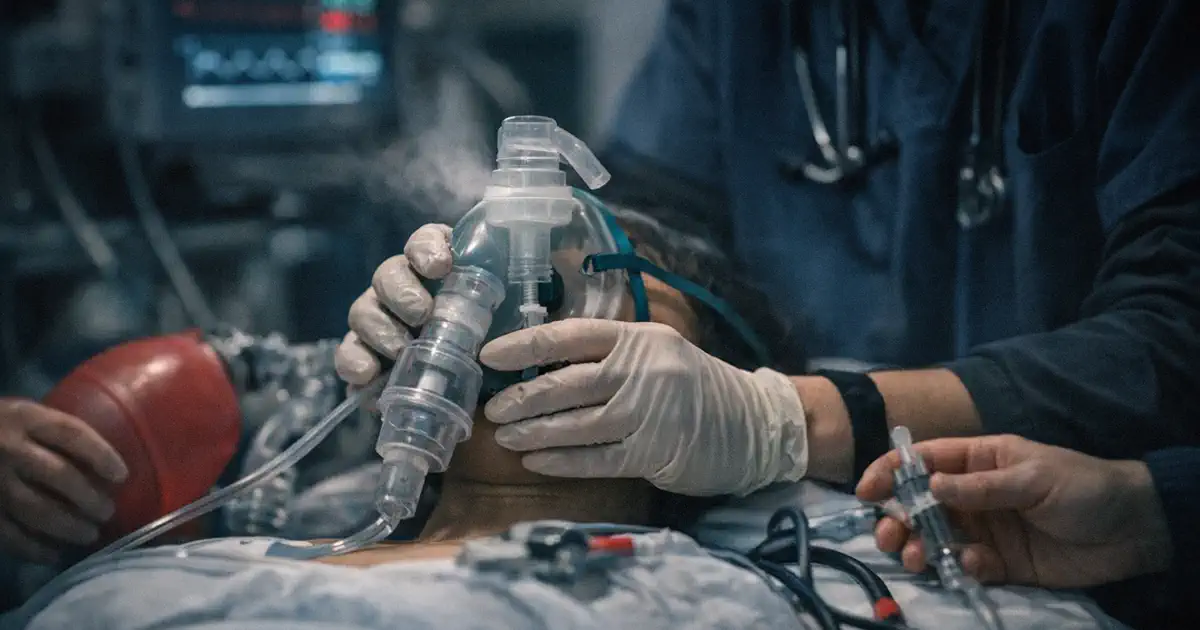
A practical first-hour framework for adult acute asthma in the ED: treat early, reassess visibly, recognize failure, and make discharge part of treatment.
A patient arrives sitting forward, speaking in two-word bursts. The triage oxygen saturation looks acceptable, but the respiratory rate is climbing and the patient is tiring. The first treatment is already being prepared. The harder job is deciding whether this is asthma, how severe it is, and when the response is failing.
The 2026 Global Initiative for Asthma (GINA) guide makes the sequence plain: assess severity while treatment starts, look for features that make the episode life-threatening, and keep alternate causes of acute breathlessness in view (GINA 2026 Summary Guide). In the ED, the first hour is not a race to make the wheeze disappear. It is a structured test of physiology, response, and trajectory.
Start treatment while you establish severity
Do not wait for a complete history before treating a patient with severe symptoms. GINA recommends immediate inhaled short-acting beta2-agonist, inhaled ipratropium, oxygen when needed, and systemic corticosteroids for a severe exacerbation (GINA 2026 Summary Guide). At the same time, document the findings that tell the team whether the patient is improving: speech, work of breathing, mental status, respiratory rate, pulse, oxygen saturation, and an objective measure of airflow when the patient can perform it (GINA 2026 Summary Guide).
A quiet chest is not reassuring when the patient is too fatigued to move air. Drowsiness, confusion, cyanosis, or a silent chest are life-threatening features in the GINA pathway and should trigger immediate escalation and critical-care involvement (GINA 2026 Summary Guide). If the presentation does not fit the expected pattern, reconsider the diagnosis: pneumothorax, anaphylaxis, inducible laryngeal obstruction, pneumonia, acute heart failure, and pulmonary embolism can all present with acute breathlessness (GINA 2026 Summary Guide).
The bronchodilator question is not the whole question
Repeated inhaled beta2-agonist is the foundation of acute treatment, with ipratropium added for severe presentations (GINA 2026 Summary Guide). Delivery method should match the patient and the department’s equipment. A 2025 randomized study in adults with mild-to-moderate exacerbations found similar discharge rates with budesonide-formoterol and salbutamol delivered by inhaler, but the study was small and conducted in an outpatient ED; it should not be used to replace the initial treatment pathway for a patient in extremis (PubMed study of budesonide-formoterol versus salbutamol).
Steroids are early therapy, not a discharge-afterthought. The 2026 GINA summary guide recommends a short course of oral corticosteroid for more-than-mild exacerbations, with adult prednisolone 40–50 mg each morning for 5–7 days as one listed regimen (GINA 2026 Summary Guide). Route still depends on the patient and clinical context.
Magnesium is an adjunct for an inadequate response to intensive initial treatment, not a reflex added to every nebulizer round (GINA 2026 Summary Guide). The large 3Mg randomized trial in adults with acute severe asthma did not show a clinically worthwhile overall benefit from intravenous or nebulized magnesium, although it left room for selective use in severe, treatment-resistant cases (3Mg trial). That is the bedside distinction: reserve the adjunct for the patient whose physiology remains dangerous after the first-line bundle, and involve critical care early when the trajectory is poor.
Avoid the intubation trap
Intubation may be necessary, but it is not a substitute for recognizing treatment failure early. In a 2024 cohort of adults with life-threatening asthma admitted to intensive care, 30% required invasive ventilation; pH and PaCO2 were among the strongest predictors of that need (adult life-threatening asthma cohort). A patient who is tiring, becoming hypercapnic, or developing altered mental status needs a coordinated airway plan before the last-minute crash.
Noninvasive support belongs in a monitored pathway with clinicians who can recognize deterioration and move to an invasive airway without delay. A 2024 analysis of 62,392 ICU patients found wide variation in adjunct treatment and ventilation patterns across hospitals; the hospital cluster using more noninvasive ventilation had more hospital-free days and lower adjusted in-hospital mortality than the cluster using more invasive ventilation, but this observational association cannot prove that NIV caused the difference (practice-patterns study). The lesson is not “NIV for everyone.” Define failure criteria and keep the airway team close.
The first hour ends with a disposition decision
Improvement is not the same as readiness for discharge. Reassess symptoms, oxygen requirement, examination, and objective airflow when available after initial therapy; GINA emphasizes frequent monitoring and reassessment of response (GINA 2026 Summary Guide). A patient who needs repeated rescue treatments, remains hypoxemic, has a concerning trajectory, or has life-threatening features belongs on a monitored escalation pathway rather than a “wait and see” disposition.
Discharge is a treatment transition. The patient should leave with an ICS-containing plan, an inhaler technique check, clear return precautions, and follow-up (GINA 2026 Summary Guide). The ED encounter is also a reachable moment to improve long-term asthma care; clinicians interviewed in a 2025 study described both that opportunity and barriers to making sure patients leave with inhaled corticosteroid access (acute-asthma discharge study). Dr. Shermer’s patient-facing guide to surviving an ER visit reinforces the same operational point: discharge instructions only help when the patient understands what to do next.
Simulation can make this sequence repeatable. The Global MedOps Command approach is to practice the handoffs and reassessments that fail under pressure, not just the medication list. Run a scenario in the EM-Sim catalog, assign one learner to announce the next reassessment, and debrief the moment the team recognized—or missed—the failing trajectory.
Dr. Chet's Take
I have spent more than 25 years in emergency medicine and have watched asthma become dangerous in the gap between “the oxygen saturation is okay” and “the patient is exhausted.” The article gets the central point right: treat immediately, but make the response visible. I want the team to name the work of breathing, air movement, mental status, and trajectory before the first treatment is finished. Wheeze is a sound. It is not a disposition.
That being said, I do not want a protocol to turn into a substitute for looking at the patient. Magnesium has a place. Noninvasive support has a place. The honest answer is that the sickest patient may not give you a clean threshold before deteriorating. If you are the attending, put a reassessment time on the clock, call respiratory therapy early, and tell the team what will make you move to the next level of support. In asthma, a calm room and an early airway plan are both clinical interventions.
Key Takeaways
- Start inhaled bronchodilator therapy, ipratropium for severe presentations, oxygen when needed, and systemic corticosteroids while you assess severity (GINA 2026 Summary Guide).
- Treat drowsiness, confusion, cyanosis, a silent chest, worsening fatigue, or deteriorating gas exchange as escalation signals, not reassuring quiet (GINA 2026 Summary Guide).
- Use magnesium and noninvasive support selectively after intensive initial treatment, with explicit failure criteria and early critical-care involvement (3Mg trial; practice-patterns study).
- Make discharge a treatment transition: confirm the ICS-containing plan, technique, return precautions, and follow-up (GINA 2026 Summary Guide).
If you're an emergency physician, EM resident, medical student, or APP trying to understand how AI will actually impact your clinical practice — not just the hype — I put together a free practical guide. You can download it here: AI in EM Survival Guide.
FAQ
What should be given first for a severe asthma exacerbation in the ED?
Start inhaled short-acting beta2-agonist, add inhaled ipratropium for severe presentations, give oxygen when needed, and start systemic corticosteroids while assessing severity (GINA 2026 Summary Guide).
When should magnesium be used for acute asthma?
GINA 2026 lists intravenous magnesium sulfate as an option when the patient has an inadequate response to intensive initial treatment (GINA 2026 Summary Guide). The adult 3Mg trial did not show a clinically worthwhile overall benefit, so magnesium should be a selective adjunct rather than an automatic step (3Mg trial).
When should an emergency physician call for an airway team in asthma?
Call early when the patient is tiring, developing altered mental status, failing noninvasive support, or showing worsening gas exchange; drowsiness, confusion, cyanosis, and a silent chest are life-threatening features in the GINA pathway (GINA 2026 Summary Guide). A 2024 ICU cohort found pH and PaCO2 useful predictors of invasive ventilation need, which supports early blood-gas review when the patient is deteriorating (adult life-threatening asthma cohort).
What should be included in an asthma discharge plan from the ED?
Confirm an ICS-containing treatment plan, check inhaler technique, provide return precautions, and arrange follow-up based on risk (GINA 2026 Summary Guide). The ED visit can also be used to close gaps in access to inhaled corticosteroids after the acute episode (acute-asthma discharge study).
Sources
- Global Initiative for Asthma. 2026 Summary Guide for Asthma Management and Prevention
- Goodacre S, et al. The 3Mg trial: intravenous or nebulised magnesium sulphate versus placebo in adults with acute severe asthma
- Watson AJR, et al. Characteristics, Management, and Outcomes of Acute Life-Threatening Asthma in Adult Intensive Care
- Homer-Bouthiette C, et al. Practice Patterns for Acute Asthma Exacerbation in Adult Intensive Care Units
- Kornthatchapong K, et al. Nebulised high-dose corticosteroids as add-on therapy for adults with asthma exacerbation
- Books by Dr. Shermer
- Related simulation training: EMS-MedSim