Why Simulation Training Is Transforming Emergency Medicine Education
Chester "Chet" Shermer, MD, FACEP · May 18, 2026
About the author: Dr. Chester Shermer, MD, FACEP
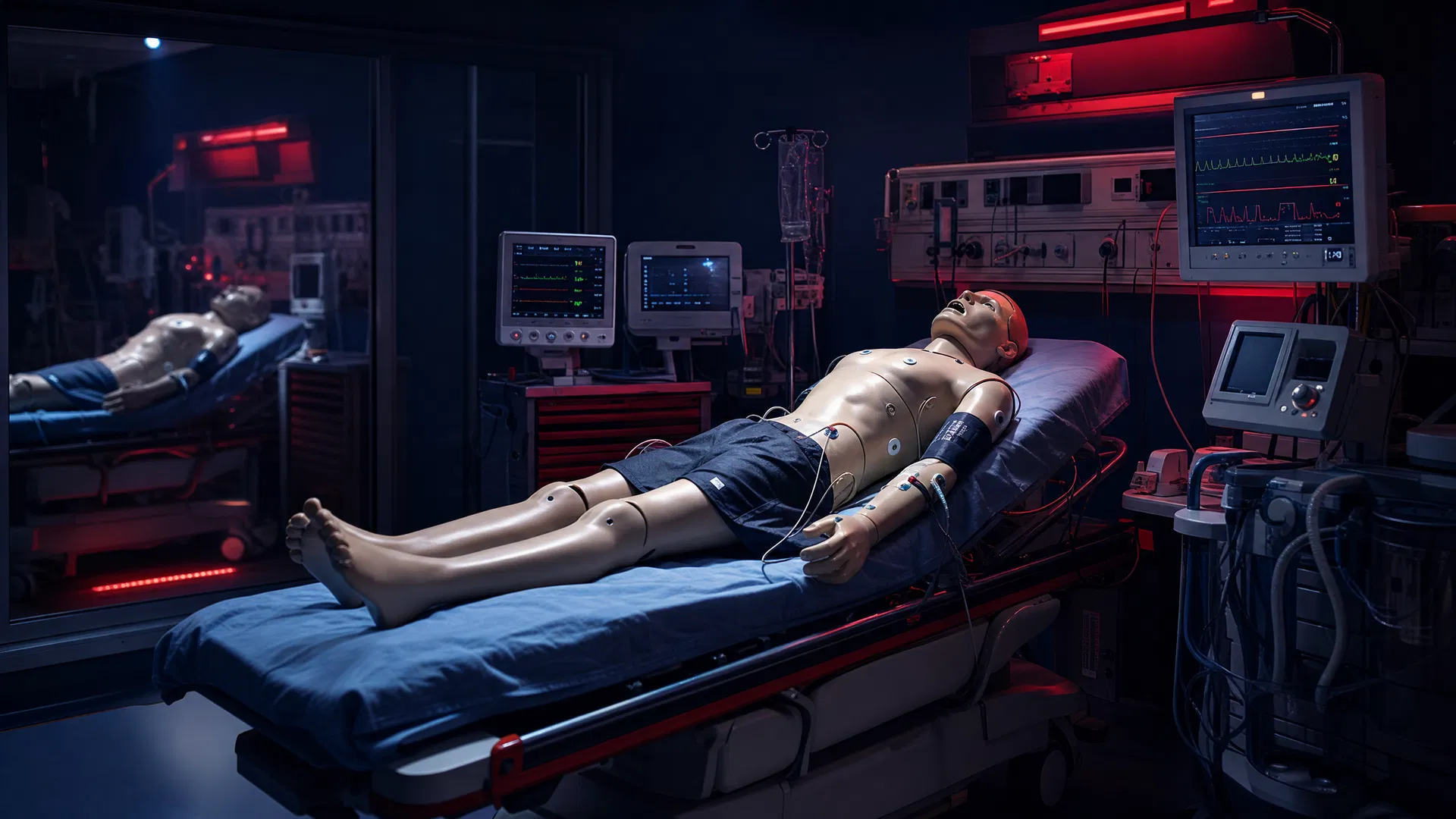
High-fidelity simulation is reshaping how emergency physicians learn and maintain clinical competency. Here's the evidence — and what it means for your training.
The emergency department is a crucible of critical decision-making, where every second counts and the stakes are inherently high. From managing a crashing septic patient to resuscitating a polytrauma victim, our ability to perform under pressure, synthesize complex information, and execute precise interventions directly impacts patient outcomes. Traditional medical education, while foundational, often struggles to replicate the dynamic, high-stress environment of the ED. This is where simulation training isn't just an adjunct; it's becoming an indispensable cornerstone, transforming how we educate and maintain competency in emergency medicine.
The Unmet Needs of Traditional Clinical Training
For decades, the "see one, do one, teach one" model, supplemented by didactic lectures and textbook learning, was the standard. While invaluable for exposure to real patients, this approach has inherent limitations, particularly in emergency medicine:
- Infrequent High-Acuity Events: Some critical conditions, like malignant hyperthermia or a tension pneumothorax in a pediatric patient, are rare. Learners might complete an entire residency without directly managing such a case, leaving gaps in their practical experience.
- Ethical Constraints: Practicing high-risk procedures or managing critical events on actual patients, especially during the initial learning phase, carries significant ethical concerns and potential for patient harm.
- Lack of Standardized Exposure: Clinical rotations are inherently variable. One resident might encounter multiple intubations, while another sees none. This variability makes it challenging to ensure all learners achieve a consistent baseline of competency across critical procedures and clinical scenarios.
- Limited Opportunity for Deliberate Practice and Error: In a real clinical setting, there's little room for error and even less for "do-overs." Learning from mistakes is crucial, but not at the expense of patient safety.
Simulation bridges these gaps by providing a safe, controlled, and reproducible environment for deliberate practice, error analysis, and mastery of critical skills without patient risk.
High-Fidelity Simulation: Replicating Reality for Enhanced Learning
High-fidelity simulation goes beyond basic task trainers. It involves sophisticated mannequins and simulated environments that closely mimic the physiological responses, clinical signs, and chaotic atmosphere of a real emergency. This allows for:
- Physiological Realism: Mannequins can be programmed to display vital signs, heart and lung sounds, palpable pulses, and even respond to interventions like medication administration or defibrillation. This provides immediate, tangible feedback on the efficacy of treatment.
- Environmental Immersion: Simulation labs can be designed to look and feel like an emergency bay, complete with monitors, crash carts, and even the ambient noise of a busy ED. This immersion helps learners practice communication, teamwork, and resource utilization in a realistic context.
- Scenario Versatility: Educators can create an infinite array of clinical scenarios, from common presentations like chest pain to rare, life-threatening emergencies. Scenarios can be paused, replayed, and adapted based on learner performance, allowing for focused remediation.
The goal isn't just to make it look real, but to evoke the same cognitive and emotional responses that occur in a real clinical crisis. This "stress inoculation" helps learners develop resilience and perform effectively when the stakes are real.
Debriefing: The Cornerstone of Simulation-Based Learning
While the simulation itself is powerful, the debriefing session afterward is arguably where the most profound learning occurs. A well-structured debriefing, facilitated by experienced educators, allows participants to:
- Reflect on Performance: Participants review their actions, decisions, and communication strategies during the scenario.
- Identify Strengths and Weaknesses: The facilitator guides a discussion on what went well and areas for improvement, often using video recordings of the simulation for objective feedback.
- Explore Cognitive Processes: Beyond just what was done, debriefing delves into why certain decisions were made, uncovering underlying knowledge gaps, biases, or flawed decision frameworks.
- Synthesize Learning Points: Key takeaways are reinforced, linking the simulation experience to theoretical knowledge and evidence-based guidelines.
Effective debriefing is non-judgmental, psychologically safe, and learner-centered. It fosters a culture of continuous improvement and self-correction, which is vital in emergency medicine. Global MedOps Command emphasizes structured debriefing models, such as the PEARLS framework (Promoting Excellence And Reflective Learning in Simulation), to maximize educational impact.
Practical Applications in Emergency Medicine Training
Simulation training is being integrated into various aspects of emergency medicine education:
1. Mastering Critical Procedures
From advanced airway management (e.g., rapid sequence intubation, cricothyrotomy) to central line insertion, thoracostomy, and resuscitative hysterotomy, simulation provides a safe space for repeated practice. Learners can refine their technique, manage complications, and build muscle memory before performing these procedures on actual patients. The ability to practice on various anatomical models, including those with challenging airways or difficult vascular access, ensures a broader skill set.
2. Enhancing Teamwork and Communication (CRM/ERM)
Emergency medicine is a team sport. Crisis Resource Management (CRM) or Emergency Resource Management (ERM) principles, borrowed from aviation, are crucial. Simulation scenarios are excellent for practicing:
- Closed-loop communication: Ensuring messages are received and understood.
- Role allocation: Clearly defining who is doing what.
- Situational awareness: Maintaining a comprehensive understanding of the patient's condition and environment.
- Leadership and followership: Practicing effective team leadership and supporting team members.
- Managing cognitive load: Learning to prioritize and delegate in high-stress situations.
A well-run simulation will deliberately introduce stressors and challenges to test these non-technical skills, which are just as critical as clinical knowledge.
3. Deliberate Practice of High-Acuity, Low-Frequency Events
Consider scenarios like:
- Cardiac arrest management (ACLS 2020 guidelines): Practicing high-quality CPR, defibrillation, rhythm interpretation, and medication administration in a team setting.
- Management of severe sepsis/septic shock: Initiating fluid resuscitation, vasopressors, and antibiotics within the "golden hour."
- Polytrauma resuscitation: Following ATLS principles, managing multiple injuries simultaneously, and coordinating with consultants.
- Toxicology emergencies: Identifying specific toxidromes and initiating appropriate antidotes or supportive care.
- Pediatric emergencies: Managing febrile seizures, status asthmaticus, or compensated vs. decompensated shock in a pediatric patient.
These are scenarios where real-life exposure can be unpredictable. Simulation ensures every learner gets to "run" these critical cases multiple times, building confidence and competence.
4. Assessment of Competency
Simulation is increasingly used for objective assessment of clinical and procedural skills. Rather than relying solely on subjective evaluations, simulation-based assessments can provide standardized, reproducible measures of a learner's ability to perform under pressure, make critical decisions, and execute procedures safely and effectively. This can be particularly valuable for high-stakes evaluations, such as board certification or credentialing.
The Future of EM Education: Integrating Simulation Across the Continuum
The role of simulation in emergency medicine education is only set to expand. We're moving towards:
- Longitudinal Integration: Simulation isn't just for residents; it's being incorporated into medical school curricula, advanced practice provider training, and ongoing continuing medical education for attending physicians.
- Virtual Reality (VR) and Augmented Reality (AR): These technologies promise even greater immersion and accessibility, allowing for "anytime, anywhere" practice.
- AI-driven Feedback: Artificial intelligence could provide personalized feedback during simulations, identifying subtle errors or inefficiencies that might be missed by human facilitators.
- Interprofessional Training: Bringing together physicians, nurses, paramedics, and other healthcare professionals for team-based simulations to improve system-level performance.
At Global MedOps Command, we are actively exploring and implementing these advancements to ensure our training programs remain at the forefront of medical education.
Conclusion: Mastering the Art and Science of Emergency Medicine
Emergency medicine demands a unique blend of scientific knowledge, procedural dexterity, and the ability to perform under extreme pressure. While clinical experience remains paramount, simulation training offers an unparalleled opportunity to accelerate learning, refine skills, and develop the critical non-technical competencies essential for success in the ED. By providing a safe, controlled, and reproducible environment for deliberate practice and robust debriefing, simulation isn't just transforming emergency medicine education; it's empowering us to deliver safer, more effective care to our patients. Embrace simulation – it's how we'll master the art and science of emergency medicine.
Chet Shermer, MD, FACEP, is the Founder & Medical Director of Global MedOps Command. He is a board-certified emergency physician with over two decades of clinical experience in emergency medicine, simulation education, and medical leadership. Through EM-Sim, Global MedOps Command provides simulation-based training for healthcare professionals worldwide.
Experience EM-Sim for Yourself
EM-Sim is built on exactly the principles described in this article — high-fidelity branching scenarios, immediate AI feedback, and deliberate practice of high-risk, low-frequency cases. Try the Penetrating Chest Trauma with Tension Pneumothorax scenario completely free — no account required.
→ Try a Free Scenario | → View All 31 Scenarios