Hyperkalemia in the ED: Protect the Heart, Shift the Potassium, Plan the Exit
Chester "Chet" Shermer, MD, FACEP · August 27, 2026
About the author: Dr. Chester Shermer, MD, FACEP
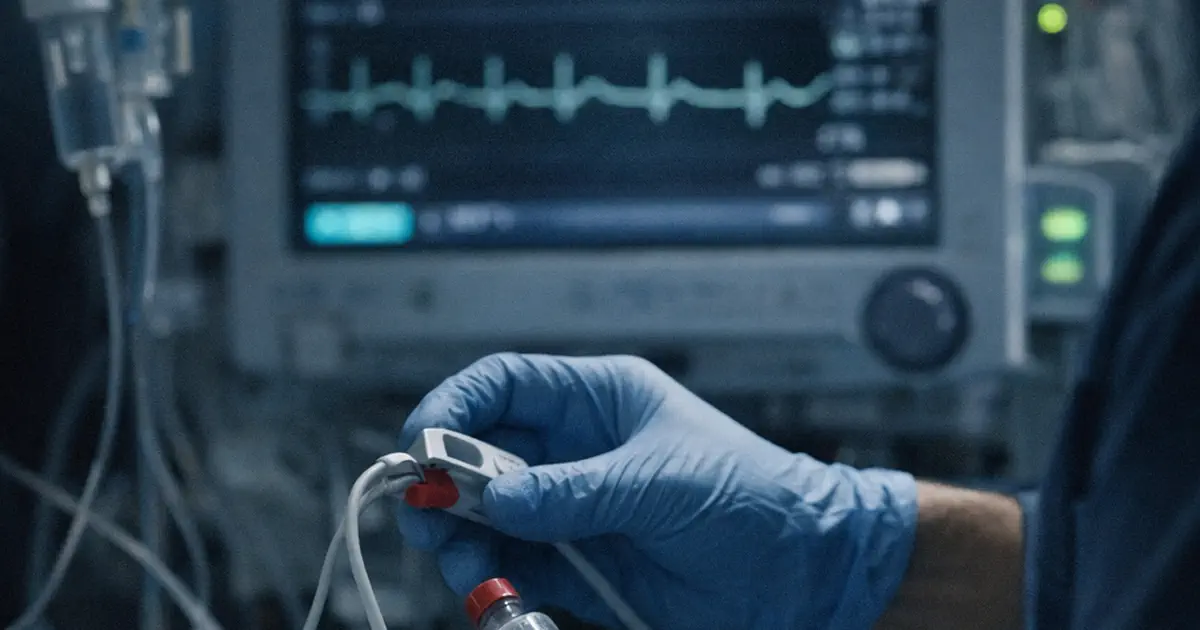
A practical ED sequence for hyperkalemia: verify the result, read the ECG, protect the heart, shift potassium, prevent insulin-related hypoglycemia, and plan definitive removal.
The call comes from triage: “Potassium 7.1.” The patient is awake, the blood pressure is acceptable, and the monitor looks almost ordinary. That is the dangerous moment. A number has announced a threat, but it has not yet told you whether the sample is real, whether the myocardium is affected, or whether the patient can safely remain in the department.
Hyperkalemia treatment is not one medication. It is a sequence: verify enough to avoid treating an artifact, look for electrical toxicity, protect the heart when indicated, shift potassium temporarily, remove potassium from the body, and keep checking after the first improvement. The 2023 UK Kidney Association guideline and the ACEP adult hyperkalemia algorithm give practical frameworks, while newer evidence helps show where the framework is fragile.
Start with two questions: Is the result real? Is the myocardium threatened?
A hemolyzed sample can send you toward an unnecessary insulin order, but a plausible result in a patient with kidney failure should not wait for perfect certainty. Repeat the potassium promptly when pseudohyperkalemia is plausible, use a clean sample, and put the patient on a monitor while you resolve the discrepancy. The ACEP algorithm explicitly prompts clinicians to consider spurious and pseudo-hyperkalemia and to repeat potassium testing after initial treatment. (ACEP adult hyperkalemia algorithm)
Get a 12-lead ECG for a hospitalized patient with potassium at least 6.0 mmol/L, and use continuous ECG monitoring for potassium at least 6.5 mmol/L, hyperkalemic ECG findings, or a clinically unwell patient with potassium 6.0–6.4 mmol/L when a rapid rise is possible. Those are the 2023 UKKA thresholds; your local protocol may set a lower trigger. (UKKA 2023 guideline, sections 14.1–14.2)
A reassuring ECG does not dismiss a dangerous potassium level. ECG findings are variable, so use the ECG with the potassium value, clinical context, and reassessment.
Protect the heart before you chase the number
Calcium does not lower serum potassium. It buys time by antagonizing potassium’s effect on cardiac membrane excitability. In the 2023 UKKA guidance, ECG changes are the indication for IV calcium: 30 mL of 10% calcium gluconate over 10 minutes, or 10 mL of 10% calcium chloride over 5 minutes, with calcium chloride preferred in cardiac arrest or peri-arrest and calcium gluconate for other patients. (UKKA 2023 guideline, section 16.2)
Follow the local concentration, dose, route, and repeat-ECG plan; the ACEP algorithm starts with one gram of IV calcium gluconate and repeats the ECG in five minutes. (ACEP adult hyperkalemia algorithm)
Cardiac arrest is a separate evidence problem. The 2025 American Heart Association CPR and ECC guideline says IV calcium and bicarbonate may be administered for suspected hyperkalemia during arrest, but human evidence is limited and outcome benefit is uncertain. Insulin with glucose may be administered; inhaled beta-agonist therapy is not recommended for lowering potassium during arrest. Do not interrupt high-quality CPR or defibrillation for these uncertain interventions.
Shift potassium, then remove it
Insulin with glucose and nebulized beta-agonist therapy move potassium into cells. They do not remove the patient’s total potassium burden, so a lower result at one hour is a bridge, not a disposition decision. The UKKA 2023 guideline recommends 10 units of soluble insulin with 25 g of glucose for severe hyperkalemia at least 6.5 mmol/L and suggests the same regimen for moderate hyperkalemia at 6.0–6.4 mmol/L; it recommends nebulized salbutamol 10–20 mg as adjunctive therapy and not as monotherapy for severe hyperkalemia. (UKKA 2023 guideline, sections 16.3–16.4)
Sodium bicarbonate should not be an automatic third drug. UKKA suggests that IV bicarbonate not be used routinely for acute hyperkalemia, while the ACEP algorithm says to consider it when metabolic acidosis is present. That is a clinical-context intervention, not a reflex attached to every elevated potassium. (UKKA 2023 guideline, section 16.5; ACEP adult hyperkalemia algorithm)
Removal is the part of the plan that prevents rebound. Dialysis is definitive when the patient has life-threatening or refractory hyperkalemia, advanced or oliguric renal failure, or a need for urgent renal replacement therapy. The UKKA guideline calls for an urgent nephrology or critical-care decision in life-threatening hyperkalemia and urgent dialysis for hemodialysis patients with potassium at least 6.5 mmol/L. (UKKA 2023 guideline, sections 18.1–19.6)
Sodium zirconium cyclosilicate can be part of removal planning, but it is not a substitute for calcium or immediate resuscitation. In the small ENERGIZE randomized ED trial, all 70 participants received insulin and glucose; adding the binder produced a greater potassium reduction at two hours, but the four-hour difference was unclear and the sample was too small for firm conclusions. (ENERGIZE trial) A 2026 review still calls for more acute-care validation. (Acute hyperkalaemia in emergency care: evidence-based approaches)
The glucose trap is part of treatment
Insulin is effective at shifting potassium, but hypoglycemia is not a footnote. The 2023 UKKA guideline recommends checking glucose before treatment, then at 15, 30, 60, 90, 120, 180, 240, 300, and 360 minutes after insulin-glucose, with a 10% glucose infusion for five hours when pretreatment glucose is below 7.0 mmol/L. (UKKA 2023 guideline, sections 16.3.3 and 17.2)
A 2024 renal-centre quality-improvement study shows why the order set matters. After more selective use of insulin-dextrose, sodium zirconium cyclosilicate for moderate hyperkalemia without ECG changes, and hourly glucose checks for up to six hours, hypoglycemia fell by 73% in the comparison periods. This was not a randomized trial and the population was a renal inpatient cohort, but the operational lesson transfers: the glucose-monitoring order belongs beside the insulin order. (2024 insulin-dextrose harm study)
Write the clock into the handoff. “Insulin at 14:10” is not enough: include pretreatment glucose, dextrose dose, planned glucose checks, repeat potassium time, ECG response, and who owns the next decision.
Make disposition part of the order
The UKKA guideline suggests serum potassium checks at one, two, four, six, and 24 hours after identification and treatment of moderate or severe hyperkalemia, with the early check assessing response and later checks looking for rebound. (UKKA 2023 guideline, section 17.1)
Before discharge, ask: Did the potassium stay down? Was the initial value plausible? Is the cause addressed? Who owns the recheck? Ongoing kidney failure, recurrent hyperkalemia, medication triggers, oliguria, or a need for dialysis do not become low risk simply because insulin worked once. (ACEP adult hyperkalemia algorithm)
This is a good sequence to rehearse in the EM-Sim scenario catalog: an abnormal lab call, a quiet ECG that changes, a calcium decision, a glucose complication, and the phone call to nephrology. The broader Global MedOps Command work starts from the same premise: clinical readiness is built from repeatable decisions, not from memorizing a single drug dose.
Dr. Chet's Take
I have spent more than 25 years in emergency medicine, including HEMS and Guard medical leadership, and hyperkalemia remains one of the easiest problems to underreact to when the patient looks well. The right move is not to stare at the potassium in isolation. Get the ECG. Put the patient on a monitor. Decide whether the myocardium is threatened, then run the shift-and-remove plan while somebody owns the clock. That sequence is the part this article gets right.
That being said, the bedside is messier than any algorithm. I have seen a frightening number attached to a bad sample, and I have seen an ordinary-looking ECG in a patient who was one missed reassessment away from trouble. A protocol can prevent omission, but it cannot decide whether this patient needs dialysis now. You still have to call nephrology, look at urine output, review the medications, and ask what the potassium will do after the insulin wears off.
If you are the attending, make the glucose checks and the repeat potassium part of the original order set, not a verbal promise. If you are in the bay, say the treatment times out loud and put them in the handoff. EMS-MedSim is a useful place to rehearse the prehospital-to-ED handoff version of that problem. The patient should leave the resuscitation plan with an owner and a next potassium time.
Key Takeaways
- Treat hyperkalemia as a sequence: confirm when appropriate, obtain an ECG, protect the heart when indicated, shift potassium, remove potassium, and monitor for rebound. (UKKA 2023 guideline)
- Calcium protects cardiac excitability but does not lower the serum potassium; follow it with a repeat ECG and a plan to lower and remove potassium. (ACEP adult hyperkalemia algorithm)
- Insulin-glucose is a temporary bridge and can cause delayed hypoglycemia, so glucose monitoring belongs in the initial order. (2024 insulin-dextrose harm study)
- Dialysis and early specialty involvement matter when hyperkalemia is life-threatening, refractory, or occurring in advanced renal failure. (UKKA 2023 guideline)
FAQ
What ECG changes should make me treat hyperkalemia immediately?
Treat the patient and the ECG, not a single textbook pattern. ACEP lists arrhythmia, bradycardia, prolonged PR or QRS intervals, diminished P-wave amplitude, and ST or T-wave changes as concerning findings; the UKKA guideline recommends IV calcium when ECG changes are present. (ACEP adult hyperkalemia algorithm; UKKA 2023 guideline)
Does calcium lower the potassium level?
No. Calcium stabilizes the cardiac membrane while insulin-glucose and beta-agonists shift potassium into cells; dialysis and potassium binders remove potassium from the body. (ED hyperkalemia evidence review)
How long should I monitor glucose after insulin for hyperkalemia?
The 2023 UKKA guideline specifies checks through 360 minutes, with checks every 30 minutes for the first two hours and hourly thereafter; patients at higher risk for late hypoglycemia may need longer monitoring. (UKKA 2023 guideline)
When should I call nephrology for emergency dialysis?
Call early when hyperkalemia is life-threatening, resistant to initial medical therapy, associated with advanced or oliguric renal failure, or present in a hemodialysis patient with potassium at least 6.5 mmol/L. The timing and modality decision should be made urgently with nephrology or critical care. (UKKA 2023 guideline, sections 18.1–19.6)
Sources
- UKKA 2023 hyperkalemia guideline
- ACEP adult algorithm
- AHA 2025 CPR and ECC guideline
- Peacock WF, et al. ENERGIZE: Emergency Potassium Normalization Treatment Including Sodium Zirconium Cyclosilicate
- Abou Sherif S, et al. 2024 insulin-dextrose harm study
- 2026 emergency-care review
- ED hyperkalemia evidence review
- Related simulation training: EMS-MedSim
- Related operations guidance: Global MedOps Command (main site)
- Books by Dr. Shermer
If you're an emergency physician, EM resident, medical student, or APP trying to understand how AI will actually impact your clinical practice — not just the hype — I put together a free practical guide. You can download it here: AI in EM Survival Guide.