Prehospital Ketamine: The ED Inherits the Dose
Chester "Chet" Shermer, MD, FACEP · August 27, 2026
About the author: Dr. Chester Shermer, MD, FACEP
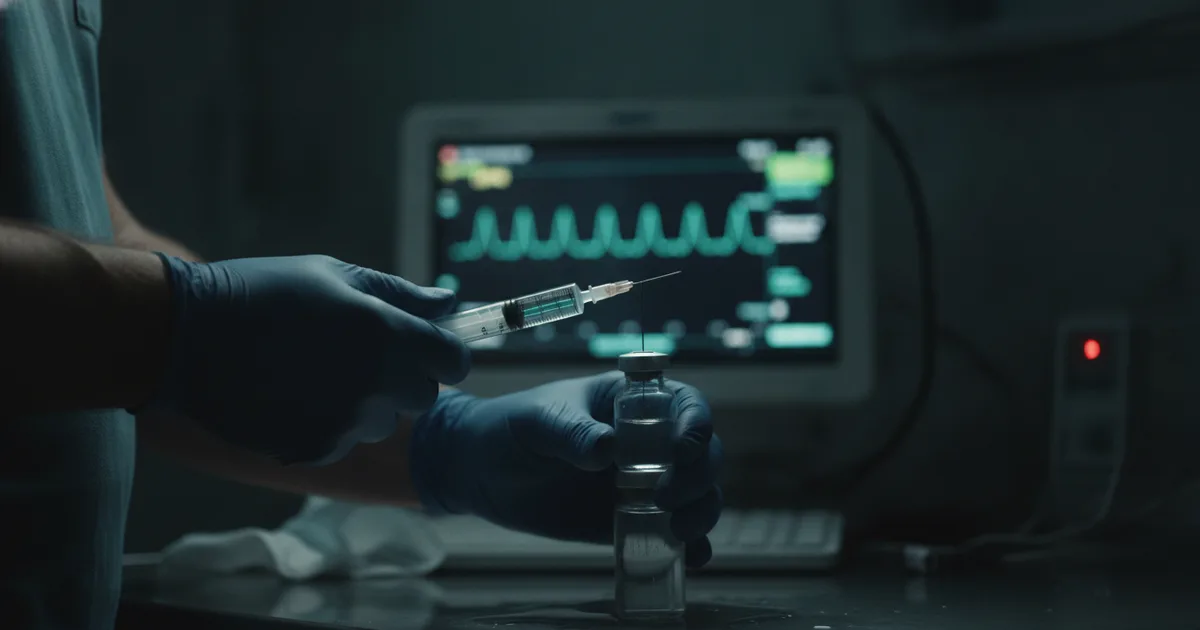
A sedated arrival is not automatically an intubation. What the evidence says about prehospital ketamine, and the two questions to ask before the crew leaves.
The radio report is twenty seconds long. Combative at the scene, ketamine intramuscular, quiet since. The patient rolls through your door sedated and breathing shallowly, and the decision about the airway is yours — made by a physician who was not there, never saw the agitation, and does not know the weight the dose was calculated from.
That is the moment prehospital ketamine becomes an emergency department problem. The drug itself is not in doubt. Intramuscular ketamine sedates a profoundly agitated patient quickly, and for a crew trying to keep someone from harming himself on a roadside, speed is the point. What is in doubt is what arrives at your door afterward, and who is accountable for it.
Read the last decade of evidence as a systems story rather than a pharmacology one and it becomes far more useful at the bedside.
The number that started the argument
A 2016 cohort of profoundly agitated patients treated with prehospital ketamine reported endotracheal intubation in 63%, 85 of 135. That figure shaped more protocol than any trial has, and it describes one system, one era, and one dosing practice.
The wider picture came from a systematic review and proportional meta-analysis of ketamine for rapid sedation of agitated patients across prehospital and emergency department settings. Pooled intubation after prehospital administration was 30.5%. When the same drug was given for the same indication inside the emergency department, it was 1.8%.
Same drug. Same indication. The difference is everything that surrounds the syringe.
That gap is not pharmacology. It is a weight estimated by eye, a dose drawn under pressure, monitoring that goes intermittent in a moving truck, and a receiving team that meets the patient after peak effect instead of during it.
Dose is the variable anyone actually controls
The 2020 joint position statement from ACEP, the American College of Surgeons Committee on Trauma, NASEMSO, NAEMSP and NAEMT put numbers on the page: 3 to 5 mg/kg intramuscular, 1 to 2 mg/kg intravenous for acute agitation. Those are wide bands. The top of the intramuscular range is nearly double the bottom.
Now add field arithmetic. A weight guessed thirty percent high turns an intended 4 mg/kg into something closer to 5.5 mg/kg. Nobody made an error. The protocol permitted it.
Services that narrowed the band published what happened. A decreased-dosing protocol found no statistically significant difference in intubation between standard and reduced dosing, 14.2% against 18.5% — worth sitting with, because it means the reduction did not cost sedation success. A later cohort using a mean prehospital dose of 3.1 mg/kg reported intubation in 12%.
The honest counterweight belongs in the same paragraph. A rescue-intubation study of 86 patients found 16.3% intubated and found no dose-dependent relationship within its sample. Higher temperature and a lower Glasgow Coma Score tracked with intubation instead. Dose is the lever we hold. It is not the only thing deciding who ends up on a ventilator.
The patient in front of you, not the number
That evidence changes the first five minutes. A patient sedated with prehospital ketamine is not automatically an intubation. Get a temperature early: hyperthermia was one of the few things that tracked with needing an airway, and it points at the toxidrome or exertion underneath the agitation rather than at the ketamine. Reassess sedation depth over time rather than at a single arrival snapshot; the drug's peak and your first look rarely coincide.
Then ask the question the chart will not answer: how much, based on what weight, and how long ago.
Indication drift is the quieter failure
In October 2023, ACEP withdrew its 2009 white paper on excited delirium and reaffirmed that the term should not be used by the medical community, by law enforcement, or by ACEP members testifying as expert witnesses. Its 2021 task force had already moved to "hyperactive delirium with severe agitation."
This is not a vocabulary dispute. A protocol keys on an indication, and when the indication is a syndrome the specialty has retired, the field decision inherits that vagueness: who qualifies, who does not, and who decides at two in the morning with police on scene.
What the ED owes the medic, and what the medic owes the ED
The handoff should carry the drug, the route, the dose in milligrams and the weight it was based on, the time it was given, the agitation score before and after, what monitoring ran during transport, and what changed en route. A dose without a denominator is not a report. This is the same discipline as treating the handoff like a procedure: a structured exchange with required fields, not a courtesy.
The department half of that bargain gets forgotten. A medic who never learns the patient was intubated twenty minutes after handoff has no way to calibrate the next call. Closing that loop costs a phone call, and it is the single cheapest quality intervention available to a receiving department.
If you want the reps before the real call, the agitated-patient handoff is worth rehearsing in the scenario catalog — the assessment is easy in a classroom and hard at 2 a.m. with three people holding a stretcher.
Dr. Chet's Take
I have spent twenty-five years in emergency medicine and a good share of it in HEMS and critical care transport, and I have been on both ends of this handoff. I have been the physician taking a sedated patient off a stretcher with no idea what the crew actually saw, and I have been the one reading the case afterward wishing somebody had written down a number. The argument here is right. Prehospital ketamine has never been a bad-drug problem. The 63% figure and the 1.8% figure describe the same molecule, and the distance between them is made of dose bands, weight guesses, and monitoring that stops when the truck starts moving.
That being said, I would not let anyone read this as "just lower the dose and the problem goes away." The rescue-intubation data found no dose-dependent effect within its own sample, and temperature and depressed consciousness carried more signal than milligrams did. The honest answer is that dose is the variable we control best, not the variable that explains the most. A patient who is hyperthermic and already obtunded from whatever he took before EMS arrived was heading toward an airway regardless of what got drawn up. Lowering the dose is a reasonable, evidence-supported move. Believing it is the whole intervention is how a system stops looking at the rest of the picture.
If you are the attending taking this patient, do two things before you reach for the tube. Get a temperature and a real reassessment over time rather than judging depth of sedation from the arrival snapshot, and ask the crew for the dose and the weight it came from before they walk out the door. If you are a resident, write that number in your note every time, because you will be the one setting the protocol in five years and you will want the data. The department that asks for the denominator is the one that finds its own failure mode first.
Key Takeaways
- The same drug for the same indication carried a 30.5% intubation rate given prehospital and 1.8% given in the department; the gap is dose, weight estimation, monitoring and timing rather than pharmacology (systematic review).
- Endorsed bands are wide at 3 to 5 mg/kg intramuscular, and a weight guessed high moves a patient across them without anyone breaking protocol (joint position statement).
- Reduced dosing did not cost sedation success, and one cohort reported 12% intubation at a mean 3.1 mg/kg (lower-dose cohort).
- Dose is not the whole story: one study found no dose-dependent effect, with temperature and Glasgow Coma Score tracking intubation instead (rescue intubation study).
- A sedated arrival is not automatically an intubation; get a temperature early and reassess over time rather than at the arrival snapshot.
- ACEP has withdrawn the 2009 excited delirium white paper, so a protocol still keyed to that term is keyed to an indication the specialty retired (ACEP).
FAQ
What is the recommended prehospital ketamine dose for acute agitation?
The 2020 joint position statement from ACEP, ACS-COT, NASEMSO, NAEMSP and NAEMT describes 3 to 5 mg/kg intramuscular and 1 to 2 mg/kg intravenous for acute agitation (joint position statement). Local protocol and medical direction govern; several services have moved toward the lower end of that band and reported intubation rates below earlier figures (lower-dose cohort).
Why do intubation rates after prehospital ketamine vary so much between studies?
Reported rates run from about 12% to 63% (2016 cohort; lower-dose cohort). The spread reflects dosing practice, the local threshold for intubating a sedated patient on arrival, patient factors such as temperature and depressed consciousness, and what each system counted (rescue intubation study).
Does a patient sedated with prehospital ketamine need intubation on arrival?
Not by default. Pooled data show most patients are not intubated, and rates fall further in systems using lower doses (systematic review; lower-dose cohort). Assess the airway, get a temperature, and reassess sedation depth over time rather than deciding from the arrival snapshot, since higher temperature and lower Glasgow Coma Score tracked with needing an airway (rescue intubation study).
Does lowering the protocol dose reduce intubation?
The evidence supports lower dosing as reasonable rather than settled. A decreased-dosing protocol found no statistically significant difference, 14.2% against 18.5%, without losing sedation success (decreased-dosing study). A separate study found no dose-dependent effect within its sample (rescue intubation study).
Should a protocol still say "excited delirium"?
No. ACEP withdrew its 2009 white paper in October 2023 and states the term should not be used in the medical community, by law enforcement, or by members testifying as expert witnesses (ACEP). Protocols keyed to that term should move to a described presentation with a recorded agitation score.
Sources
- Committee authors. Ketamine Use in Prehospital and Hospital Treatment of the Acute Trauma Patient: A Joint Position Statement
- Ketamine for Rapid Sedation of Agitated Patients in the Prehospital and Emergency Department Settings: A Systematic Review and Proportional Meta-Analysis
- Intubation of Profoundly Agitated Patients Treated with Prehospital Ketamine
- Rescue Intubation in the Emergency Department After Prehospital Ketamine Administration for Agitation
- Patient Outcomes Following Ketamine Administration for Acute Agitation with a Decreased Dosing Protocol in the Prehospital Setting
- Outcomes Associated with Lower Doses of Ketamine by Emergency Medical Services for Profound Agitation
- Intubation Rates following Prehospital Administration of Ketamine for Acute Agitation: A Systematic Review and Meta-Analysis
- American College of Emergency Physicians. ACEP Reaffirms Positions on Hyperactive Delirium
- Department of Veterans Affairs Evidence Synthesis Program. Safety of Ketamine in the Prehospital Setting
- Books by Dr. Shermer
- Related simulation training: EMS-MedSim